

Link copied!
Limit Order

A limit order in the stock market is a type of order where the investor or trader specifies the price at which they would like to buy or sell a security.
Key Takeaways
- A limit order lets you set a maximum buy price or a minimum sell price. This ensures that you execute your trades only at your desired value and prevents unfavourable market-driven prices.
- A limit order provides price control but does not guarantee execution. If the market price never reaches your set level, your order will remain unfulfilled, which can lead to missed opportunities.
- Limit orders are suitable for traders who prefer precision over speed because they can enter or exit positions at exact price levels without being affected by rapid market fluctuations.
What is a Limit Order?
A limit order is an instruction that helps the investor or trader buy or sell a security at a specific price or better. It provides traders and investors with control over the price at which a trade is executed, ensuring they don’t pay more or sell for less than their desired rate.
Unlike market orders that execute instantly at the best available price, limit orders will only execute if the market reaches the price specified by the investor or trader. This makes them a practical tool for managing trading strategy, especially in volatile or less liquid market conditions where the gap between the price you see on screen and the price you actually get can be surprisingly wide.
Limit orders come in two forms: buy limit orders and sell limit orders.
Buy Limit Order: Placed below the current market price, it ensures the investor doesn’t pay more than a certain amount.
Sell Limit Order: Placed above the current market price to ensure the security is sold at a favourable price.
For example, if a stock is currently trading at ₹800 and you want to buy it at ₹700, you place a buy limit order at ₹700. The order will be executed only if the price falls to ₹700 or below. Similarly, if you own a stock trading at ₹700 and want to sell it at ₹800, you place a sell limit order at ₹800, and the order will only be executed if the price climbs all the way to ₹800. One detail worth keeping in mind: the order executes at ₹700 or better, which means in a fast-falling market you could get filled at ₹698 or ₹695, which actually works in your favour.
Limit Order vs Market Order
Understanding the difference between limit and market orders is crucial for choosing the right execution method based on your trading goals, speed, and risk tolerance.
| Feature | Limit Order | Market Order |
|---|---|---|
| Price Control | Provides full control over the price at which you buy or sell. The order only executes at your specified price or better. | Offers little to no control over the execution price, which can vary due to market conditions. |
| Execution Speed | Might take a long time to execute or may not execute at all if the set price is not met. | Executes immediately at the best available market price. Ideal for speed. |
| Use Case | Best suited for trading in volatile or illiquid markets where prices fluctuate widely and precision is needed. | Suitable for high-liquidity stocks when immediate buying or selling is the priority. |
| Risk | Reduces the risk of slippage but carries the risk of non-execution if the market doesn’t meet your price. | Higher risk of slippage, especially during fast-moving markets or with low liquidity. |
The practical difference becomes most apparent during high-volatility moments like budget day or RBI policy announcements. A market order on a mid-cap stock during such sessions can easily slip 0.5–1% from the last traded price, whereas a limit order keeps your execution within defined bounds, even if it means the order doesn’t fill immediately.
Advantages of Limit Orders
Understanding the key advantages of limit orders helps investors execute trades more strategically, balancing control and risk effectively in a dynamic market.
Price Certainty
You can control the price you pay or receive. This ensures you don’t enter or exit a trade at an unfavourable rate due to sudden price changes or market volatility, especially when you are placing a large order. On stocks with thinner order books, even an order of 500–1,000 shares placed as a market order can move the price noticeably against you.
Better Risk Management
Limit orders help you avoid overpaying or underselling by setting clear boundaries on pricing. You can better protect your capital and stick to your pre-defined investment or trading strategies without emotional interference.
Useful for Volatile Markets
They are particularly helpful when price swings are common. In such scenarios, a limit order protects you from buying at inflated prices or selling during short-lived dips caused by market noise. This is especially relevant during the first 15–20 minutes after market open on the NSE, when spreads tend to be wider and price action is erratic before settling into a range.
Strategic Entry/Exit
Limit orders are ideal for traders aiming for specific buy or sell targets. They help execute trades in line with your technical or fundamental analysis, ensuring disciplined entries and exits without constantly monitoring the market.
Disadvantages of Limit Orders
Limit orders offer precision but also introduce specific limitations, which investors must consider to avoid missed opportunities and optimise order execution in varying market conditions.
No Guarantee of Execution
Since limit orders only execute when the market price matches your specified rate, there’s always a risk that your order may never get fulfilled. A stock might touch your limit price on the bid side without enough volume to fill your order, and then reverse direction, leaving the order unfilled despite the price appearing to have reached your level.
May Miss Opportunities
Fast price movements in volatile markets may cause your limit price to be skipped entirely, potentially missing out on quick gains or favourable entries that only last for a few seconds. This happens more often than expected during gap-up or gap-down openings, where the price jumps past your limit level without ever trading at it.
Requires Monitoring
Constant changes in market trends require you to adjust your order levels often, demanding active monitoring and analysis to stay aligned with market movements and avoid outdated pricing strategies. A limit order placed based on yesterday’s support level, for instance, may no longer be relevant if overnight news has shifted the stock’s technical picture entirely.
How to Place a Limit Order on CapMint
- Log in to your CapMint account.

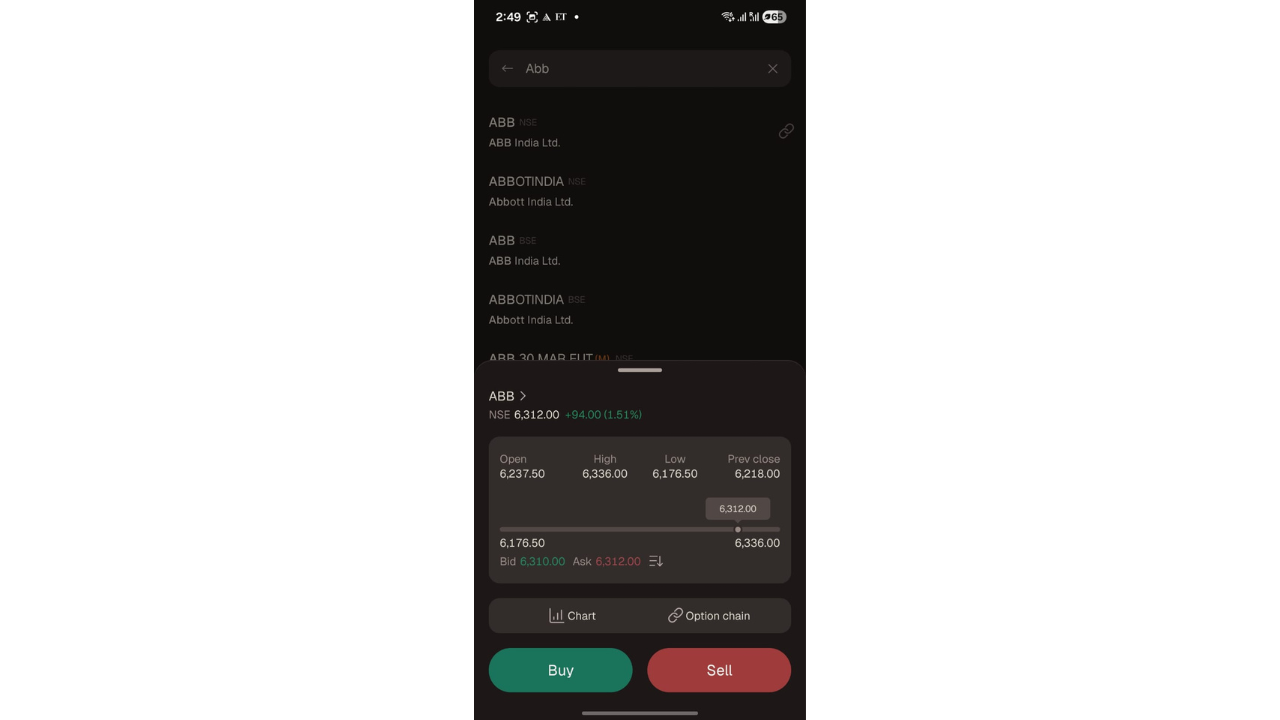
- Search for the stock you want to trade, and then click buy or sell depending on whether you want to go long or short.
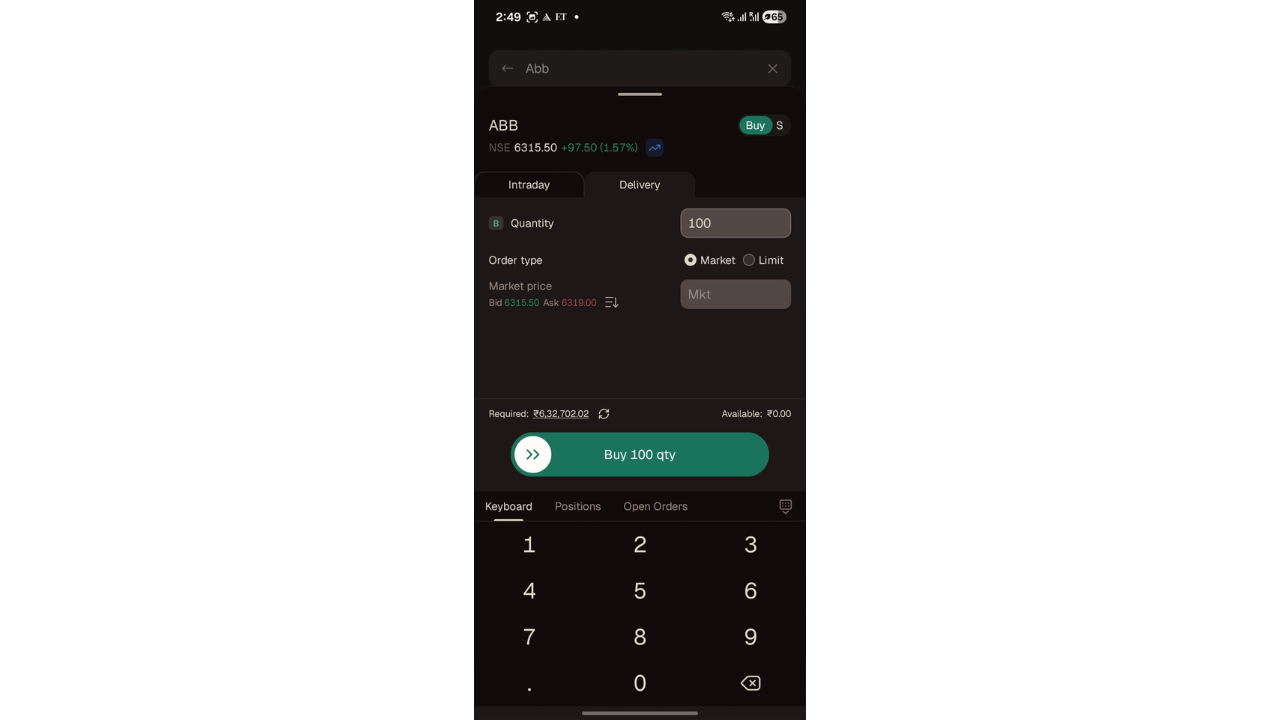
- Choose “Limit” under order type.
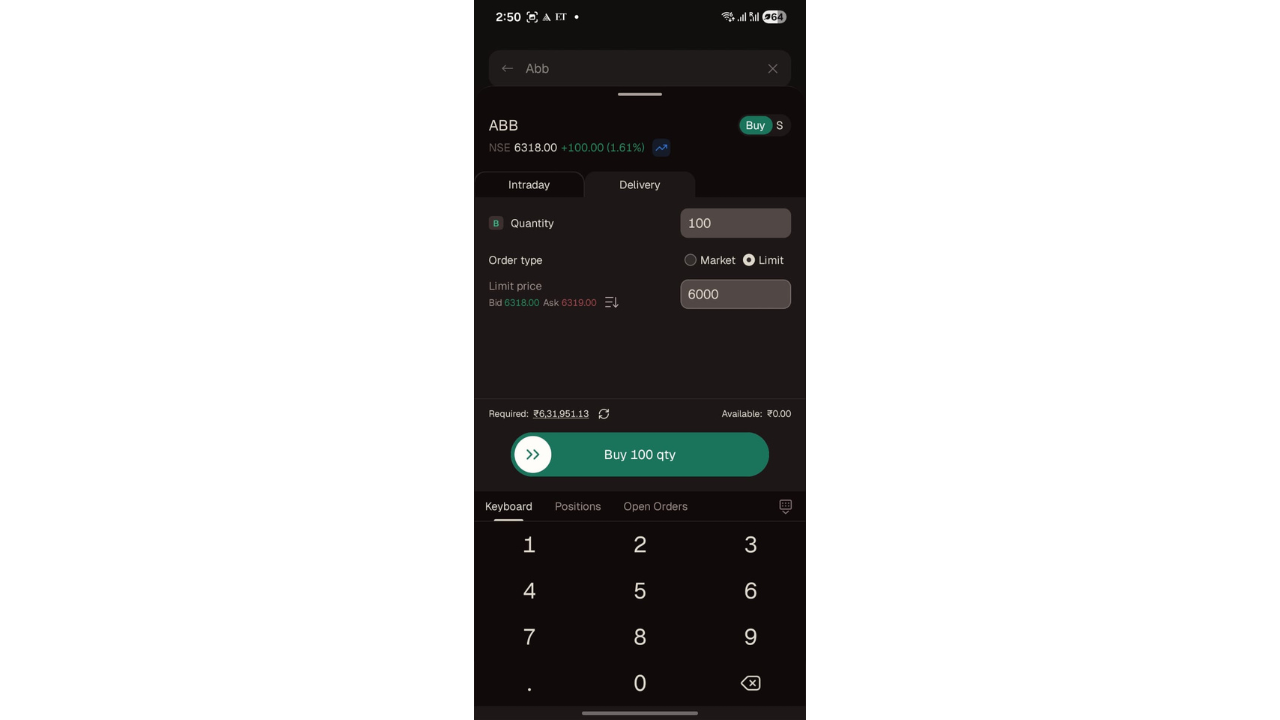
- Enter the desired price and quantity and then place the order.
Conclusion
Limit orders are a valuable tool in the Indian stock market, offering price control and disciplined trading. While they may not always execute, their strategic value in risk management and trade precision is significant. Whether you’re an experienced trader or a cautious investor, understanding how and when to use limit orders can improve your overall approach to the market. The key is to set limit prices that are realistic relative to current market structure — placing a buy limit too far below the market reduces the chance of execution, while placing it too close to the current price diminishes the advantage over a simple market order.
Frequently Asked Questions (FAQs)
What happens if a limit order doesn’t execute?
If your set price is not reached during market hours, the order remains open (if GTT) or gets cancelled (if Day Order). This protects you from getting a worse price and offers greater control over your trading strategy without exposing you to unfavourable market conditions.
Can I cancel or modify a limit order?
Yes. Limit orders can be modified or cancelled anytime before execution. You can adjust price or quantity directly via your trading platform, ensuring flexibility and allowing real-time responses to changing market movements or personal trading decisions.
Do limit orders work after market hours in India?
You can place limit orders during the pre-market session (9:00–9:08 AM for order entry, with matching at 9:08–9:12 AM) and the closing session (3:40–4:00 PM), but execution during regular continuous trading happens only between 9:15 AM and 3:30 PM. This helps plan trades ahead of time without worrying about live session volatility.
Is a limit order good for intraday trading?
Yes. Many intraday traders use limit orders to ensure better price points. The trade-off is that in fast-moving conditions, a limit order may not fill quickly enough, so intraday traders often need to decide within seconds whether to revise the limit closer to the market price or let the opportunity pass. This balance between precision and speed is central to effective intraday use of limit orders.
Disclaimer: This content is for educational purposes only and does not constitute financial or investment advice. Investments in securities or other financial instruments are subject to market risk, including partial or total loss of capital. Past performance is not indicative of future results. Always consider your financial situation carefully and consult a licensed financial advisor before making investment or trading decisions.
Engineered for the obsessed. Built for traders.

Purpose-built terminals.
Zero compromise.
Built for speed.

Plot No 1290, 2nd Floor, 17th Cross, 5th Main, Sector-7, HSR Layout, Bangalore 560102
Follow us on


Mintcap Brokers Private Limited
CIN – U66110KA2023PTC178706 | Registered Address: Plot No 1290, Second Floor, 17th Cross, 5th Main, Sector-7, HSR Layout, Bangalore 560102 | Tel: 080 – 49552310 | Email ID: compliance@capmint.com | SEBI registered Stock Broker: INZ000322732 | NSE Cash/F&O Member ID: 90430 | BSE Cash/F&O Member ID: 6903 | MCX Member ID: 57400 | NCDEX Member ID: 1312 | SEBI registered Depository Participant: IN-DP-806-2025 | CDSL DP ID: 12102300 | NSE Clearing Member code: M70108 | AMFI-Registered Mutual Fund Distributor: ARN-289109 (Valid upto 28-Feb-2027) | Category II Execution Only Platform : E6903
Details of Client Bank Account
Compliance Officer: Ms. Shridevi Vungarala | Email ID: compliance@capmint.com | Tel no. + 91 9035330126 | Grievance Redressal Officer (GRO) – Ms. Shikha Gupta | Email ID: Grievance@capmint.com | Tel no: 9035331595.
Procedure to file a complaint on SEBI SCORES: Register on SCORES portal. Mandatory details for filing complaints on SCORES: Name, PAN, Address, Mobile Number, E-mail ID. Benefits: Effective Communication, Speedy redressal of the grievances. You may refer the website https://scores.sebi.gov.in/ for more information. You may also download the SEBI Scores app to log a complaint Android: https://play.google.com > store > apps > sebiscores iOS: https://apps.apple.com > app > sebiscores
Disclaimer
Investment in the securities market are subject to market risks, read all the related documents carefully before investing. Brokerage will not exceed the SEBI prescribed limit.
Mutual fund investments are subject to market risks, read all scheme related documents carefully before investing. Mutual Funds are not exchange-traded products.
Attention Investor:
- Stock Brokers can accept securities as margin from clients only by way of pledge in the depository system w.e.f. September 1, 2020.
- Update your mobile number & email Id with your stock broker/depository participant and receive OTP directly from depository on your email id and/or mobile number to create pledge.
- Pay 20% as upfront margin of the transaction value to trade in cash market segment.
- Investors may please refer to the Exchange’s Frequently Asked Questions (FAQs) issued vide circular reference NSE/INSP/45191 dated July 31, 2020 and NSE/INSP/45534 dated August 31, 2020 and other guidelines issued from time to time in this regard.
- Check your Securities /MF/ Bonds in the consolidated account statement issued by NSDL/CDSL every month.