

Link copied!
Intraday Trading

Intraday trading involves buying and selling financial instruments within the same trading day to capitalise on short-term price movements. Intraday traders do not hold positions overnight, thereby minimising exposure to overnight market risks.
Key Takeaways
- Intraday trading means buying and selling stocks on the same day to make quick profits from price movements. Traders do not hold positions overnight, reducing the risk of unexpected market changes.
- Traders can use leverage to trade with more money than they have, increasing both profits and losses. If not managed well, leverage can wipe out capital quickly.
- Choosing liquid stocks, using technical analysis, and setting stop-loss orders help traders make better decisions and reduce risks.
- Market volatility, emotional trading, and poor risk management cause most traders to lose money. Following a disciplined approach and limiting losses is key to long-term success.
What Is Intraday Trading?
Intraday trading, which is also known as day trading, involves buying and selling stocks on the same day to profit from short-term price movements. Intraday traders close all their positions before the market closes, meaning they do not carry any trades overnight. Intraday trading significantly reduces overnight risk, which is the uncertainty of how global or domestic market events might impact stock prices when the market reopens.
Leverage is a key component of intraday trading, allowing traders to control large positions with a small capital. Brokers offer leverage (margin) to intraday traders, meaning you can trade a large position with a small investment.
Key Features of Intraday Trading
Since intraday trading requires closing all positions before the market closes, traders avoid overnight risks and unpredictable market movements. But what makes intraday trading unique? Let’s look at its key features:
No Overnight Holdings in Intraday Trading
One of the fundamental rules of intraday trading is that all positions must be squared off before the market closes. This ensures that traders do not carry any risk beyond trading hours, which is a major advantage compared to positional or swing trading.
Most brokers use Margin Intraday Square-Off (MIS), which automatically closes all positions before the market closes. This prevents traders from holding positions overnight unintentionally.
Leverage in Intraday Trading
Leverage allows traders to trade with larger positions with a smaller capital. Brokers provide this facility, letting traders amplify their potential returns. However, leverage is a double-edged sword. While it increases profits, it also magnifies losses.
Let’s take an example using Reliance Industries (RIL) stock:
- Stock Price: ₹2,500
- Your Capital: ₹25,000
- Without Leverage: Trader can buy 10 shares (₹25,000 ÷ ₹2,500).
- With 10x Leverage: Trader can buy 100 shares (₹2,50,000 ÷ ₹2,500).
Now, let’s see how leverage affects profits and losses:
If Reliance Stock Rises to ₹2,520:
- Without Leverage Profit: ₹200 (10 shares × ₹20 gain per share)
- With Leverage Profit: ₹2,000 (100 shares × ₹20 gain per share)
If Reliance Stock Falls to ₹2,480:
- Without Leverage Loss: ₹200
- With Leverage Loss: ₹2,000
Benefits Of Intraday Trading
Since leverage allows traders to maximise their returns within a single day, intraday trading offers several advantages beyond just quick profits. Let’s explore its key benefits:
Intraday Trading Reduces Risk
One big advantage for traders is avoiding overnight surprises. Since all trades are closed before the market shuts, they don’t have to worry about sudden global news, economic crashes, or company announcements that could cause stocks to gap up or down the following day.
This keeps their risk limited to the trading day, ensuring better control over profits and losses.
Lower Brokerage Fees in Intraday Trading
Intraday trading is often cheaper than delivery-based trading, as many brokers offer lower brokerage rates for intraday transactions. Since positions are squared off on the same day, there are no delivery-related or depository (DP) charges involved. However, other charges such as STT, exchange fees, and GST still apply. Overall, it can be a cost-effective option for active traders.
Risks And Challenges In Intraday Trading
While intraday trading offers quick profit opportunities, it also comes with significant risks. Let’s look at the key challenges traders face:
Market Volatility in Intraday Trading
Intraday trading is highly sensitive to sudden market movements, where stock prices can swing rapidly within minutes. Unexpected news, economic data, or global events can trigger sharp ups and downs, leading to significant losses if traders are caught on the wrong side.
For example, suppose HDFC Bank is trading at ₹1,500, and an unexpected RBI policy announcement causes banking stocks to fall. Within minutes, HDFC Bank drops to ₹1,450, resulting in a ₹50 per share loss. If a trader had taken a large leveraged position, this sudden move could wipe out a significant portion of their capital.
High Leverage Risks in Intraday Trading
Leverage allows traders to control large positions with a small amount of capital, but it also amplifies losses if the trade moves against them. A small price drop can result in a much bigger loss, sometimes wiping out the trader’s capital.
For example, suppose Tata Motors is trading at ₹600, and a trader with ₹10,000 capital uses 10x leverage to buy ₹1,00,000 worth of shares (166 shares). If the stock falls just 2% to ₹588, the total loss becomes ₹2,000, which is 20% of the trader’s actual capital.
Since leveraged trades are squared off the same day, traders may also face margin calls, where the broker forcefully exits their position if losses exceed limits. This is why leverage should be used carefully with stop-loss protection.
Essential Strategies To Practice In Intraday Trading
Given the risks of market volatility and high leverage, intraday traders need a solid strategy to stay profitable. Here are some essential intraday trading strategies to follow:
Finding High Liquid Stocks To Trade Intraday
Choosing the right stocks is crucial for intraday trading. Traders should focus on highly liquid stocks, which have high trading volumes and tight bid-ask spreads. Highly liquid stocks allow traders to enter and exit positions quickly without significant price slippage. In contrast, low-volume stocks can have wider price gaps, making it difficult to execute trades at the desired price.
Traders can find these high-volume stocks on the NSE stock equity watch website and pick stocks that are based on the highest volume. Here is the screenshot of it:

For example, in the above list, Tata Steel had a higher volume on that particular trading day.
Use Technical Analysis in Intraday Trading
Intraday traders rely on technical analysis to identify the right entry and exit points. Using chart patterns, indicators, and trend analysis, traders can make informed decisions rather than guessing market movements.
Some key tools include:
- Moving Averages – Helps identify trends and reversals.
- Relative Strength Index – RSI shows overbought or oversold conditions.
- Support & Resistance Levels – Helps set entry, exit, and stop-loss points.
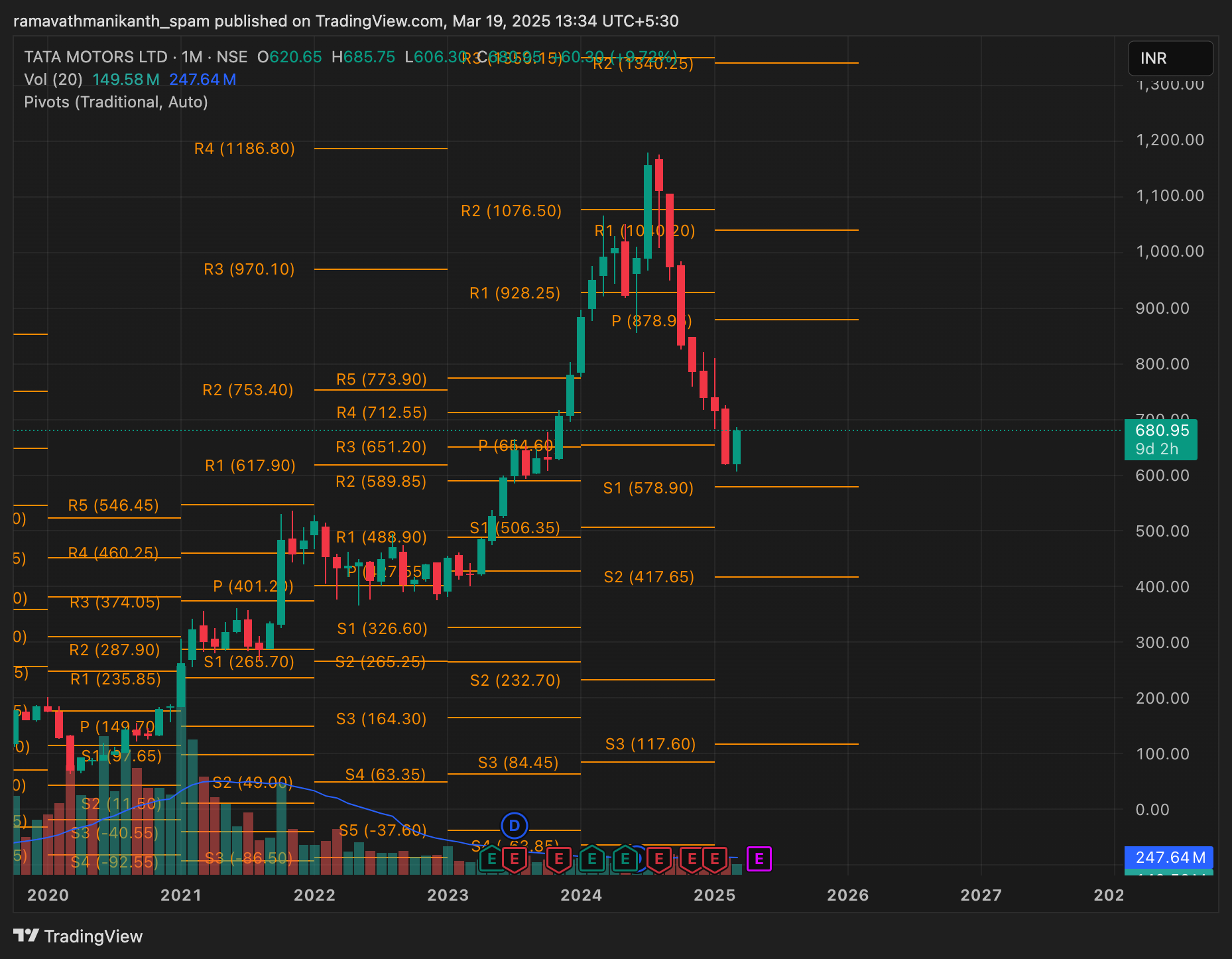
For example, with support, a bullish marubozu candlestick pattern was formed, indicating that buying pressure traders could buy the stock and bet on it on a short-term basis.
Read more: What are Support Levels?
Risk Management in Intraday Trading
Effective risk management is key to protecting capital in intraday trading. The most important rule is always to use a stop-loss order, which automatically exits a trade if the price moves against the trader beyond a set limit.
For example, if ICICI Bank is bought at ₹1,000, a trader might set a stop-loss at ₹980 to cap the maximum loss at ₹20 per share. This prevents small losses from turning into major ones.
Additionally, traders should follow the 1-2% risk rule, meaning they never risk more than 1-2% of their total capital on a single trade. This ensures sustainability in the long run, even if some trades go wrong.
Conclusion
Intraday trading in India is a great way to earn quick profits by taking advantage of short-term price movements. It offers benefits like no overnight risk, lower brokerage fees, and leverage, but it also comes with challenges such as market volatility and a high risk of losses.
To trade successfully, choosing liquid stocks, using technical analysis, and setting stop-losses are essential. Managing risk wisely, following a disciplined strategy, and not overusing leverage can help traders stay profitable. While intraday trading is exciting, it requires patience, knowledge, and strict risk management to succeed in the long run.
Frequently Asked Questions (FAQs)
What is the 3-5-7 rule in trading?
The 3-5-7 rule is a risk management strategy that helps traders control losses. It means:
- 3% maximum risk per trade
- 5% maximum loss per day
- 7% maximum loss per week
If a trader reaches any of these limits, they stop trading to avoid bigger losses.
Why do 90% of day traders lose money?
Most traders lose money because they don’t follow a strategy, take too much risk, or let emotions control their trades. Overusing leverage, ignoring stop-losses, and chasing quick profits often lead to losses. Successful traders focus on discipline, risk management, and learning from mistakes.
Are there tax implications for profits made from intraday trading?
Yes, profits from intraday trading are treated as speculative business income in India. They are taxed as per your income tax slab. Losses can be set off only against speculative gains and can be carried forward for up to four years.
How do I select stocks for intraday trading?
Choose stocks with high liquidity and volume, as they allow easy entry and exit. Look for volatility, trending stocks, and news-driven movements. Many traders also use technical indicators like moving averages, RSI, and support-resistance levels.
What are some Intraday Trading Examples?
For example, a trader buys a stock at ₹500 in the morning, expecting a price rise and sells it at ₹520 the same day, making a ₹20 profit per share. Similarly, traders may short-sell stocks expecting prices to fall and square off positions before market close.
What are the trading hours for intraday trading in India?
In India, intraday trading in the equity market takes place between 9:15 AM and 3:30 PM (IST) on trading days. Positions must be squared off before market close, or they may be auto-squared off by the broker.
Disclaimer: This content is for educational purposes only and does not constitute financial or investment advice. Investments in securities or other financial instruments are subject to market risk, including partial or total loss of capital. Past performance is not indicative of future results. Always consider your financial situation carefully and consult a licensed financial advisor before making investment or trading decisions.
Engineered for the obsessed. Built for traders.

Purpose-built terminals.
Zero compromise.
Built for speed.

Plot No 1290, 2nd Floor, 17th Cross, 5th Main, Sector-7, HSR Layout, Bangalore 560102
Follow us on


Mintcap Brokers Private Limited
CIN – U66110KA2023PTC178706 | Registered Address: Plot No 1290, Second Floor, 17th Cross, 5th Main, Sector-7, HSR Layout, Bangalore 560102 | Tel: 080 – 49552310 | Email ID: compliance@capmint.com | SEBI registered Stock Broker: INZ000322732 | NSE Cash/F&O Member ID: 90430 | BSE Cash/F&O Member ID: 6903 | MCX Member ID: 57400 | NCDEX Member ID: 1312 | SEBI registered Depository Participant: IN-DP-806-2025 | CDSL DP ID: 12102300 | NSE Clearing Member code: M70108 | AMFI-Registered Mutual Fund Distributor: ARN-289109 (Valid upto 28-Feb-2027) | Category II Execution Only Platform : E6903
Details of Client Bank Account
Compliance Officer: Ms. Shridevi Vungarala | Email ID: compliance@capmint.com | Tel no. + 91 9035330126 | Grievance Redressal Officer (GRO) – Ms. Shikha Gupta | Email ID: Grievance@capmint.com | Tel no: 9035331595.
Procedure to file a complaint on SEBI SCORES: Register on SCORES portal. Mandatory details for filing complaints on SCORES: Name, PAN, Address, Mobile Number, E-mail ID. Benefits: Effective Communication, Speedy redressal of the grievances. You may refer the website https://scores.sebi.gov.in/ for more information. You may also download the SEBI Scores app to log a complaint Android: https://play.google.com > store > apps > sebiscores iOS: https://apps.apple.com > app > sebiscores
Disclaimer
Investment in the securities market are subject to market risks, read all the related documents carefully before investing. Brokerage will not exceed the SEBI prescribed limit.
Mutual fund investments are subject to market risks, read all scheme related documents carefully before investing. Mutual Funds are not exchange-traded products.
Attention Investor:
- Stock Brokers can accept securities as margin from clients only by way of pledge in the depository system w.e.f. September 1, 2020.
- Update your mobile number & email Id with your stock broker/depository participant and receive OTP directly from depository on your email id and/or mobile number to create pledge.
- Pay 20% as upfront margin of the transaction value to trade in cash market segment.
- Investors may please refer to the Exchange’s Frequently Asked Questions (FAQs) issued vide circular reference NSE/INSP/45191 dated July 31, 2020 and NSE/INSP/45534 dated August 31, 2020 and other guidelines issued from time to time in this regard.
- Check your Securities /MF/ Bonds in the consolidated account statement issued by NSDL/CDSL every month.