
Link copied!
How to Draw and Trade Trendlines?


We know that trendlines are one of the first concepts every new trader learns. However, blindly buying the third touch of a diagonal line is often a recipe for disaster. To trade profitably, you need to understand the mechanics behind the line. In this video guide, we break down exactly how to map a trendline correctly and the four specific ways you can use them to find high-probability setups, spot fakeouts, and track institutional liquidity.
Key Takeaways:
-
Mapping Correctly (Wicks vs. Bodies): There are two ways to draw a trendline. You can connect the wicks (aggressive) or you can connect the candle bodies (conservative). We highly recommend the conservative body-to-body approach. While you may get your entry signals slightly later, connecting the bodies drastically reduces your chances of getting trapped in a false breakout. Furthermore, a trendline should never be traded in isolation. You must always combine it with horizontal confluences, such as a major Support and Resistance zone, a Fibonacci retracement level, or a Fair Value Gap.
-
Avoiding the Fakeout Trap: Retail traders often get stopped out because they mistake a liquidity sweep for a breakout. If price is approaching your trendline with very small candles and low momentum, the market has no intention of breaking out. It is likely going to dip slightly past the line to trigger retail stop-losses in a classic “fakeout” before reversing back into the main trend.
-
Confirming True Breakouts: A true breakout happens with massive momentum and large candle bodies. However, you should never enter the trade exactly as the line breaks. The professional approach is to wait for the price to break the line, form a structural Change of Character (ChoCh), and then enter on the retracement into a newly formed Supply or Demand zone.
-
Using Trendlines as Liquidity Maps: Institutional traders know exactly where retail traders place their stop-losses: right below an uptrend line and right above a downtrend line. This creates a massive pool of liquidity. Often, the best strategy is to simply wait for the market to purposefully sweep that trendline liquidity before entering a trade in the opposite direction.
“When we finally stopped trading trendlines blindly and started using them to map liquidity, our trade accuracy improved tenfold.”
By changing your perspective from viewing trendlines as solid walls to viewing them as potential traps, you can stop being the liquidity and start profiting from the sweeps. Make sure to backtest these four methods on your own charts before taking a live position.
Disclaimer: This content is for educational purposes only and does not constitute financial or investment advice. Investments in securities or other financial instruments are subject to market risk, including partial or total loss of capital. Past performance is not indicative of future results. Always consider your financial situation carefully and consult a licensed financial advisor before making investment or trading decisions.
Related Videos

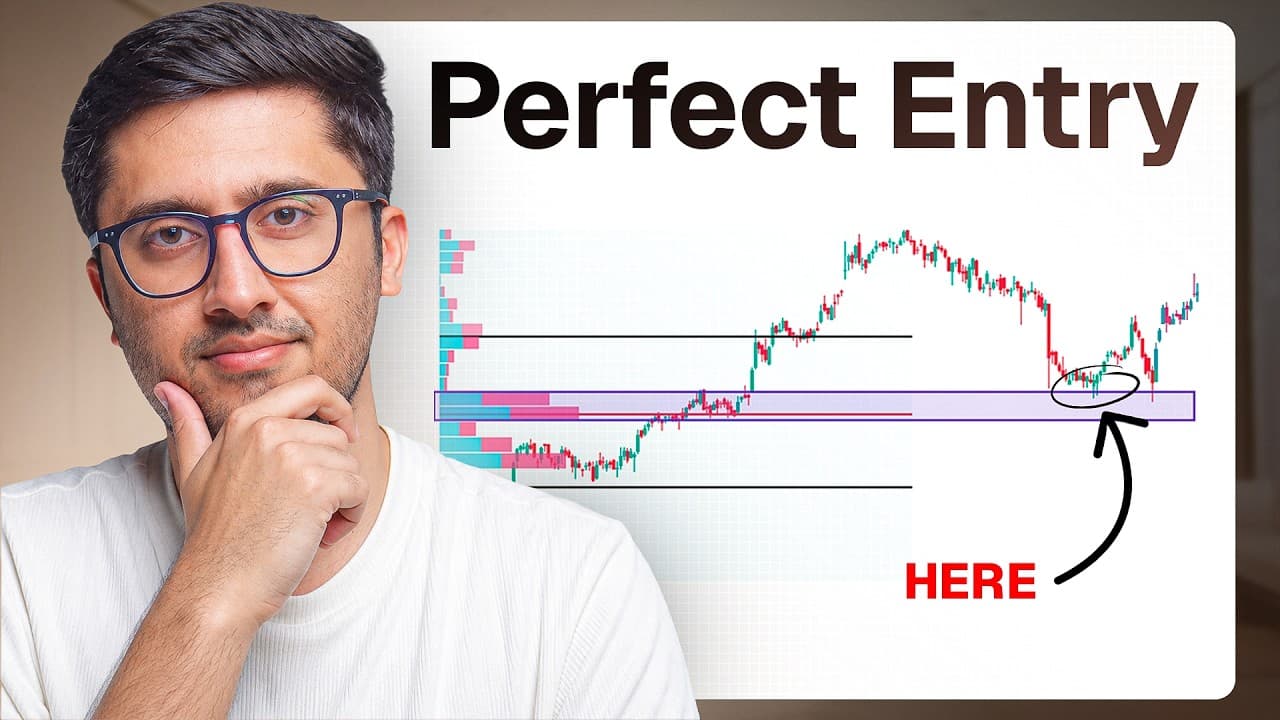
Volume Profile Pullback Strategy: Finding High-Probability Entry Zones
Volume Profile Pullback Strategy is a trading approach that combines Volume Profile with market structure concepts like BOS and CHoCH to identify high-probability pullback zones, helping traders improve entry timing and risk-reward opportunities.
28.55K views
17 mins

The 4 Market Conditions Every Trader Must Understand Before Taking a Trade
Market conditions are the different phases of price behaviour that traders encounter, including uptrends, downtrends, ranging markets, and choppy markets.
4.33K views
12 mins

Perfect Market Structure Entries via Break of Structure (BOS) & Change of Character (ChoCh)
Stop letting volatile markets hit your stop-loss and learn the structural entry secrets that actually separate profitable traders from the trapped 90%.
6.38K views
17 mins
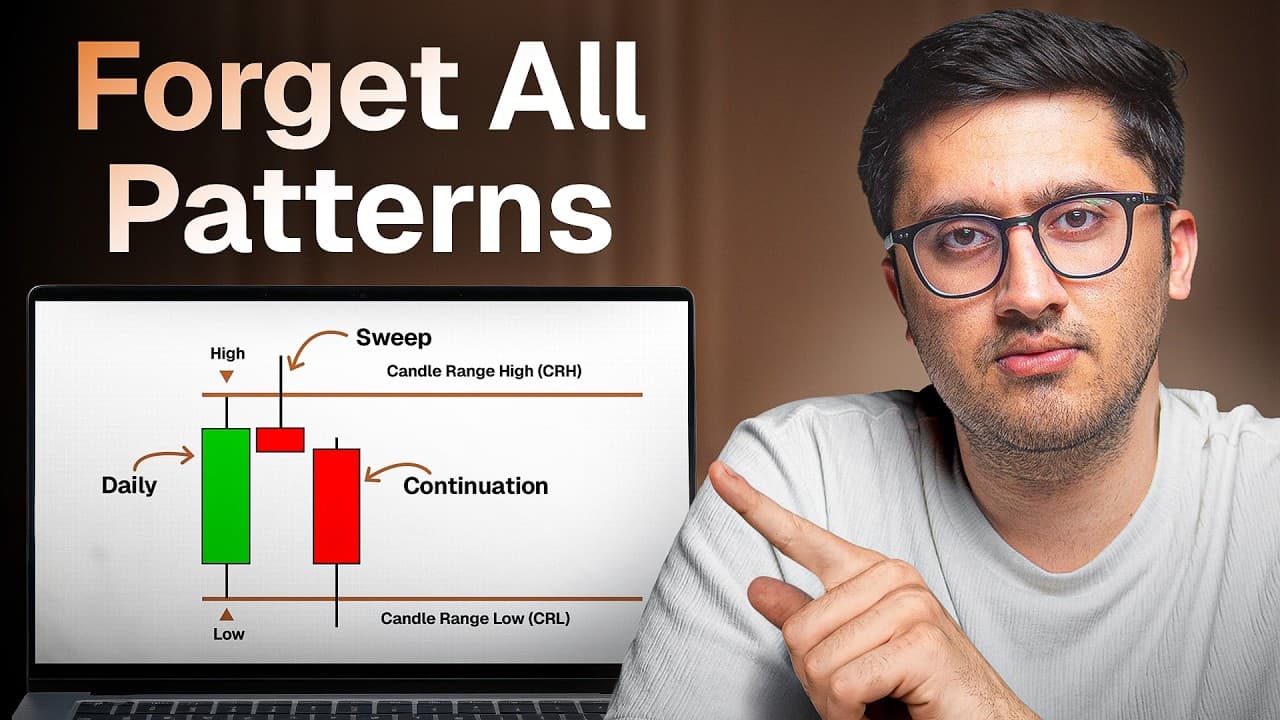
Candle Range Theory (CRT): The 3-Candle Strategy to Replace Complex Patterns
Candle Range Theory (CRT) distils price action down to the high and low of a single, powerful candle.
13.37K views
12 mins
The Ultimate SMC Strategy for NIFTY: Mastering BOS + CHoCH
Forget the myth that Smart Money Concepts (SMC) are only for crypto and forex—institutions leave their footprints heavily on NIFTY, too.
6.18K views
36 mins

Technical Analysis Course: Master Price Action and Technical Indicators
Learn technical analysis from absolute beginner to advanced execution. Designed for both beginners and pro traders, it equips you with the skills, discipline, and confidence needed to navigate and master the markets.
11.32K views
3 hr 59 mins
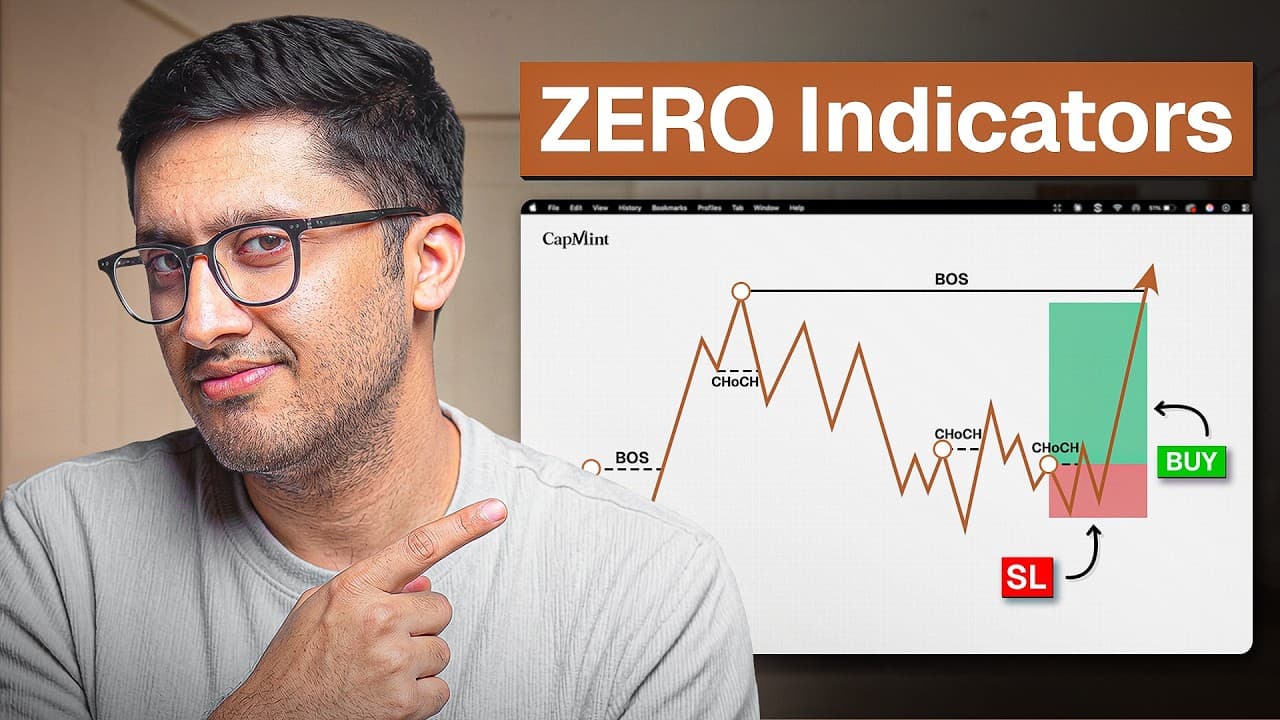
How to Trade Pure Price Action Using Multi Timeframe Analysis
Are you tired of getting trapped by false breakouts and fake trend reversals? Learn how mapping pure market structure can drastically improve your real-time execution in this masterclass.
43.30K views
22 mins

How to Trade Supply and Demand Zones Using Institutional Order Flow?
Are you tired of getting trapped by false breakouts and entering trades against the major order flow? This detailed learning module reveals the exact formula used to track where institutional money is stepping into the market.
27.22K views
14 mins

The Ultimate Guide to Multi-Timeframe Market Structure
Trading exclusively on a 5-minute or 15-minute chart is a guaranteed way to get trapped in fakeouts. In this video, we reveal the "secret sauce" of Multi-Timeframe (MTF) Analysis, showing you exactly how to align your execution timeframe with higher timeframe market structure to predict major reversals and pullbacks.
19.93K views
24 mins

The Ultimate Fibonacci Sniper Zone Trading Strategy
Finding the exact point where a market will reverse feels impossible until you know what to look for. We reveal a customized 5-step strategy that modifies the traditional Fibonacci tool to pinpoint a highly accurate "Hidden Sniper Zone" for exact entries and exits.
19.15K views
8 mins

The Secret Liquidity Strategy 97% of Traders Do Not Know
Do you ever feel like the market is specifically hunting your stop-loss? It is. We break down the "Draw on Liquidity" strategy, revealing how institutional money sweeps retail stop-losses before massive reversals, and how you can spot these traps to trade alongside the smart money.
13.18K views
8 mins

The 3-Step Market Structure Trading Strategy Explained
What happens when you backtest a pure price action strategy 100 times?We break down a highly profitable 3-step system that relies entirely on market structure, swing failures, and supply/demand zones. No complex indicators required.
45.80K views
11 mins

How to Trade the Bollinger Bands and RSI Combo Strategy?
Trading Bollinger Bands alone often leads to a low win rate and frustrating fakeouts. The CapMint Trading team reveals how to fix this by combining custom Bollinger Band settings with RSI and candlestick confirmations to build a powerful mean reversion strategy.
4.04K views
9 mins

How to Read Market Structure Like a Smart Trader?
We tried every indicator out there, but adding this one concept can skyrocket your trading performance. In this video, we break down how to read Market Structure like a pro trader.
72.39K views
16 mins
The FVG Secret: Identifying Valid vs. Invalid Fair Value Gaps
Not all Fair Value Gaps are created equal. The CapMint Trading team reveals the core differences between valid and invalid FVGs, plus 4 key factors to drastically improve your hit rate.
9.79K views
12 mins
Engineered for the obsessed. Built for traders.

Purpose-built terminals.
Zero compromise.
Built for speed.

Plot No 1290, 2nd Floor, 17th Cross, 5th Main, Sector-7, HSR Layout, Bangalore 560102
Follow us on


Mintcap Brokers Private Limited
CIN – U66110KA2023PTC178706 | Registered Address: Plot No 1290, Second Floor, 17th Cross, 5th Main, Sector-7, HSR Layout, Bangalore 560102 | Tel: 080 – 49552310 | Email ID: compliance@capmint.com | SEBI registered Stock Broker: INZ000322732 | NSE Cash/F&O Member ID: 90430 | BSE Cash/F&O Member ID: 6903 | MCX Member ID: 57400 | NCDEX Member ID: 1312 | SEBI registered Depository Participant: IN-DP-806-2025 | CDSL DP ID: 12102300 | NSE Clearing Member code: M70108 | AMFI-Registered Mutual Fund Distributor: ARN-289109 (Valid upto 28-Feb-2027) | Category II Execution Only Platform : E6903
Details of Client Bank Account
Compliance Officer: Ms. Shridevi Vungarala | Email ID: compliance@capmint.com | Tel no. + 91 9035330126 | Grievance Redressal Officer (GRO) – Ms. Shikha Gupta | Email ID: Grievance@capmint.com | Tel no: 9035331595.
Procedure to file a complaint on SEBI SCORES: Register on SCORES portal. Mandatory details for filing complaints on SCORES: Name, PAN, Address, Mobile Number, E-mail ID. Benefits: Effective Communication, Speedy redressal of the grievances. You may refer the website https://scores.sebi.gov.in/ for more information. You may also download the SEBI Scores app to log a complaint Android: https://play.google.com > store > apps > sebiscores iOS: https://apps.apple.com > app > sebiscores
Disclaimer
Investment in the securities market are subject to market risks, read all the related documents carefully before investing. Brokerage will not exceed the SEBI prescribed limit.
Mutual fund investments are subject to market risks, read all scheme related documents carefully before investing. Mutual Funds are not exchange-traded products.
Attention Investor:
- Stock Brokers can accept securities as margin from clients only by way of pledge in the depository system w.e.f. September 1, 2020.
- Update your mobile number & email Id with your stock broker/depository participant and receive OTP directly from depository on your email id and/or mobile number to create pledge.
- Pay 20% as upfront margin of the transaction value to trade in cash market segment.
- Investors may please refer to the Exchange’s Frequently Asked Questions (FAQs) issued vide circular reference NSE/INSP/45191 dated July 31, 2020 and NSE/INSP/45534 dated August 31, 2020 and other guidelines issued from time to time in this regard.
- Check your Securities /MF/ Bonds in the consolidated account statement issued by NSDL/CDSL every month.